Saturday, November 21, 2020

The Pivot

 
Time gave us an hour. The weather is cooler. It’s dark by 5:00 pm. The United States has a new president-elect. We’re teaching, learning, celebrating, even mourning virtually. We’ve mastered the pivot. 

Katura: Have we though? I’m laughing but I’m really asking too. I think I’m naturally resourceful. I bet many Black women would claim that. But mastery might be a stretch. Because sometimes, after all that pivoting, all I can be bothered to do is scroll social media, eat snacks and watch Netflix. But I get it. Your larger point is about adaptability. 

Bria: Yes. We know that change is inevitable, but some of these pivots have felt a lot like roller skating for the first time. It’s more about not falling down than it is about getting a rhythm going! Nothing is normal and probably won’t be defined that way for years to come. As a result, I’ve been thinking a lot about ancestors and legacy. This idea that what we do now will live beyond us leaves me asking: Am I my ancestor’s mildest or wildest dreams?

Katura: ‘Mildest’ sends me every time. Lol. 

Bria: It makes me chuckle too. What are your thoughts on legacy especially during this time (e.g., global pandemic, racial injustice, divisive politics)?

Katura:  I think my idea of legacy is shifting. I used to think of it as what you’d be known for. And I suppose that’s one definition. But now I think it’s less about me and more about others - and what I leave for them. What do you think? 

Bria: I agree. I want the people coming after me to have a much smoother runway to land on. An inclusive and equitable place to live, laugh, learn, grow, work and play without having to question and/or challenge others’ ability to acknowledge, respect and honor their humanity.

Bria: Staying on legacy, we’ve passed a marker with recent elections. We saw transgender, nonbinary and BIPOC people be elected to serve in government, including the second highest office in the nation. Black women (again) played an integral role in increasing voter registration and turnout. What do you think Black women’s role will be in shaping this society as we move to take care of ourselves more while challenging systems that don't protect us?

Katura: First let me acknowledge that I probably don’t know about many of the contributions Black women have made to this country. Black women have BEEN doing the work and I’m sure will continue to do so. What I see changing is that 1) we’re telling the stories about that work in ways that are being more widely heard and amplified; 2) we’re shifting away from shouldering tremendous responsibility at our expense. I think we’re getting better at taking care of ourselves while taking care of others. We talked about pivoting earlier. That’s an important pivot. 

Bria: We talked about preparations we wanted to make in anticipation of daylight saving time. I, for one, did not anticipate such a hard transition. What have you been doing to keep your vibrations high as the world gets darker and colder?


Katura: I am struggling! And I knew I would be, because sun and fresh air were as important as music in keeping me lifted this summer. I have started to get up earlier so I can enjoy more daylight hours. Before I open my laptop, I make sure I step out on the porch for deep breaths of fresh air. I scrapped my formal at-home work station for a bright and comfy spot on my sunporch. While this Jersey weather still allows it, I spend time outside on the weekends. Even standing in line outside Trader Joe’s counts when it’s sunny! What are you doing? 

Bria: My body started waking up earlier (without my permission) before the time changed. Initially, I just chalked it up to my body not needing the extra sleep. When the time actually changed it was brutal! I was all out of whack. It’s rare that I fall back asleep once I’m awake, so I decided to use this extra time differently. Instead of getting up to start my day only to feel like a zombie by noon, I embraced the dark and quiet. I stretch and breathe, sometimes meditate or read (not on my phone or other device) and actually wait until the sun comes up to start my day. It’s made a big difference. 

Katura: Funny, my early mornings started without my permission too! So we have regular video chats with our friend Elizabeth (hey Elizabeth!) and we always end with good news or something we’re grateful for. I like ending on a high note, so let’s bring that spirit to this post. As I’m writing this, I’m feeling very grateful for my gratitude practice. That’s kind of meta but it’s true. Every day, throughout the day, I think about good things that are happening - to me, my friends and family, acquaintances and strangers. What you focus on grows, and finding the good has become second nature for me. It helps with the pivot too. Of course, it doesn’t mean I’m happy all the time, but even when I’m annoyed, angry, etc, I don’t stay there long. Gratitude brings me back. What’s your good word?

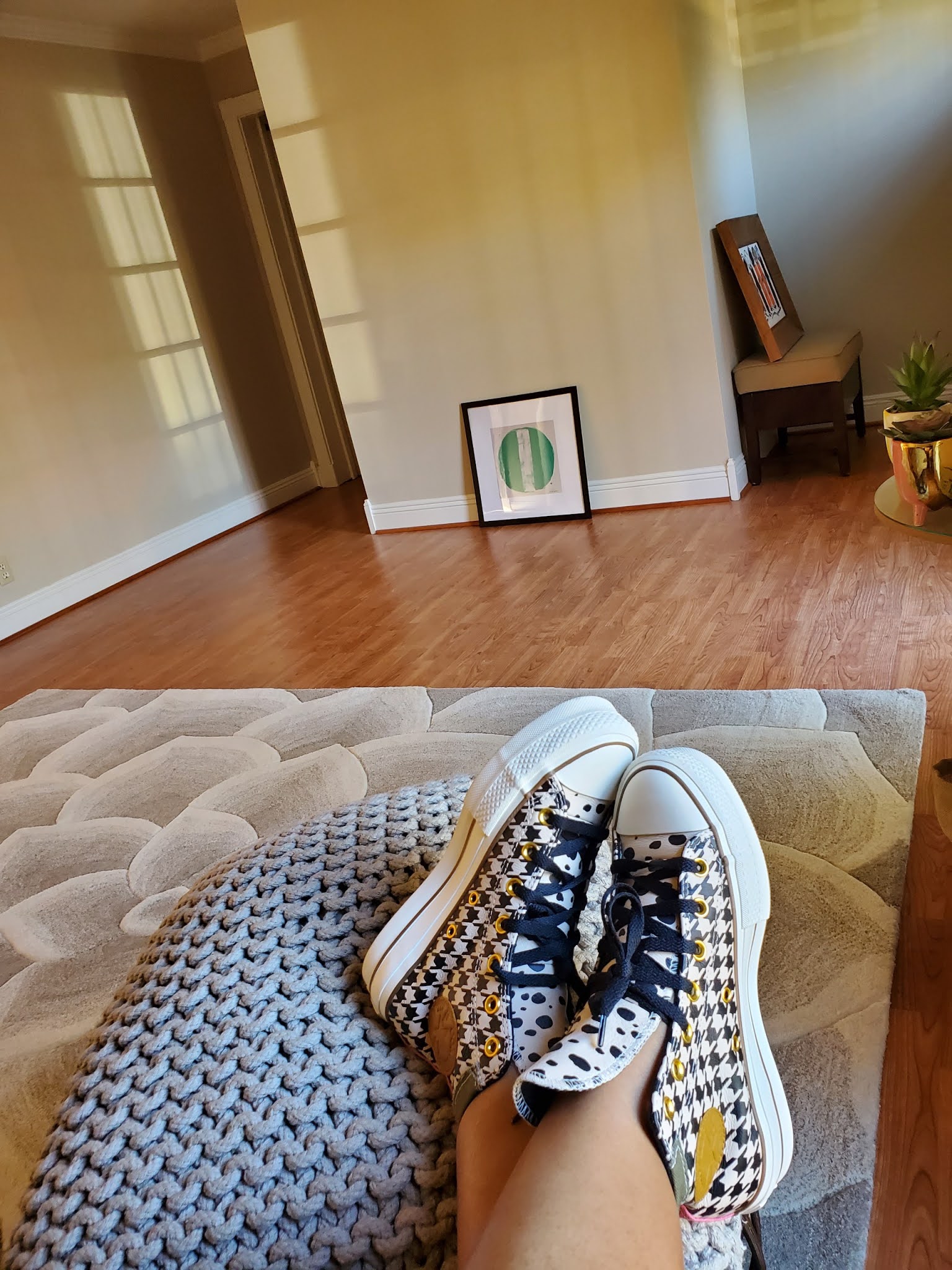
Bria: Gratitude is a game changer. I’m much better at it than I’ve ever been especially with some of the challenges my family and friends have faced this year. Fact is, 2020 has dealt some severe blows. But I’m learning to be thankful for the littlest of things like toilet paper in Target (big shout out to the essential workers solving our first-world problems). The good word comes from my ten-year old nephew. I recently got to visit with him and his sister (in love with these kids!). He walked up to me, hugged me, looked down at my sneakers and said, “TiTi, you know what? You’ve got style!” So I’ll keep slaying these dragons on his and his sister’s behalf, in style. 


Bria R. Griffith is a multi-industry organizational leader on a mission to connect community and business to implement strategies that promote social and economic equity.
Katura Hudson is a writer and strategist with a passion for community; diversity, equity & inclusion; and New Edition.


Friday, September 18, 2020

When You Need A Break


We started this blog because we were always talking: text, email, DMs on all social platforms, occasionally even phone calls. But this summer, we got quiet. So we decided to write about it. 


Katura: We took an unintentional hiatus from our blog this summer. We were busy with multiple projects, but that’s always been the case. And there was definitely plenty going on in the world to talk about. Too much, actually. Maybe that’s why we were quiet? 


Bria: I unknowingly unplugged. Looking back I was very overwhelmed by what was happening in the world. My work centers Black girls and women and Black girls and women need so much support for so many reasons. I was consulting with organizations about diversity, equity and inclusion, and it’s hard at times to see light at the end of a very profit-driven tunnel. I was having multiple conversations that left me empty. I was struggling with the faith community and its role in healing folks during times of crisis. It was a lot. So getting quiet was probably the compromise I made with myself between processing what was going on in the world and protecting my energy. What do you think made you quiet?


Katura: I hear you on the convos that leave you empty. When your work involves community building, social justice, inclusion and equity strategy - it requires sustained commitment. There are no quick fixes especially when so many people still don’t acknowledge the system is the problem and a social media post won’t fix it. I’m not an activist or organizer, but this summer I was overwhelmed. Same injustices, different day. Staying informed, engaged, focused on impact, holding space for others — none of that is optional for me. But blowing up a friend’s inbox with news that makes us both feel this work isn’t working? Totally optional. So I opted out. 


What’s interesting is that it was weeks before we realized we had gotten quiet. We made our decisions independently out of self-preservation (and sisterly consideration). Now we sometimes share articles with a disclaimer: ‘FYI. I didn’t read this yet bc I want to have a good day.’


Katura: How do you know you need a break? Is there one tell-tale sign for you?


Bria: I don’t get easily distracted. I do pretty well at managing to do lists and prioritizing tasks. So, when I look up and there’s a long list of not done or a pile of unfinished things, it hits me that I’m doing too much and need to regroup, reenergize and/or reprioritize. More than anything this pandemic has taught me to slow down and prune. What about you? Is there something specific you do when you realize you need a break?


Katura: I often plow through my To Do lists even when I’m overwhelmed. What’s different is my energy. I become highly annoyed about what I’m doing and that people are requesting even more from me. I’m learning to pay attention to those feelings and set better boundaries so I’m not reacting to overwhelm but preventing it. I have a long way to go. Lol.  But what’s working for me so far is being vocal about my boundaries, giving myself a whole day or two to relax and have (socially distant)  fun — no work. And then actually leaving the house, which is where most of the work is these days. 


Bria: The end of summer is upon us. COVID-19 derailed summer 2020 plans and the “smell from a grill could spark up nostalgia” kind of summer we were looking forward to was all but eliminated by social distancing and safety precautions necessary to protect folks from the transmission of the Coronavirus. Fun may have not been as accessible this summer, but protests highlighting racial inequality, inequity and injustice in this country were front and center. August has a deep connection to the civil rights movement with many moments in civil rights history taking place in August. Taking into account where this nation is right now, what’s your hope for August 2021?


Katura: I thought you were going to ask about my hope for fall of THIS year. A whole year from now?? I gotta be honest, I’m trying not to get far ahead of myself these days. There’s a lot of worry there. I’m trying to be more grounded in the present. That said, I hope by this time next year that more companies and organizations are doing the (equity) work, not just talking and writing about it. We saw the statements this summer. A year from now I want to see the actions that will back them up. And I hope that marginalized, underresourced groups will be centered in the change we’re fighting for, just not in bearing responsibility for doing that work.


Bria: Speaking of hope, I HOPE we continue to see beautiful Black women showcasing their talents on Verzuz battles! The buzz and buildup to Brandy and Monica, and most recently Patti and Gladys was almost as entertaining as the “battle” itself! I had a great time watching all of it! Who would like to see in an upcoming Verzuz battle in the fall?


Katura: How amazing was that Verzuz?? Ms. Gladys and Ms Patti gave a show!! And I absolutely participated in the hype. My Verzuz dinner was the pre-show!  Now I don’t know who I’d match her up with but I’d love to see Chaka Khan play some joints and share some stories. And Missy! Lyte vs Latifah could be dope. I Love how Verzuz pivoted from a straight up battle to a celebration. We need that. 


Bria: Now I’m thinking about food and wine pairings for the battles you just named!


***


Bria R. Griffith is a multi-industry organizational leader on a mission to connect community and business to implement strategies that promote social and economic equity. Katura Hudson is a writer and strategist with a passion for community; diversity, equity & inclusion; and New Edition.


Wednesday, June 17, 2020

Must Be the Music


In our blog about self-care, music came up several times. That’s no surprise. Music can bring joy, help us heal, forget, remember, learn, and of course make us dance. And honestly, these past few weeks, music has been THE thing helping us get through. June is Black Music Month, so we thought, let's give music the celebration it deserves, cause we deserve too.

Thursday, May 21, 2020

Two Friends Talking: Radical Self-Care


Bria: So, the world is dealing with a lot right now. People are facing unprecedented challenges living through a global pandemic. How are you taking care of yourself?


Katura: I’m grateful that my loved ones and I are healthy and safe. So taking care of myself has meant eating relatively well, listening to great music, staying away from things that don’t bring me joy, and drawing closer to things and people who do. What about you?


Bria: I’m thankful that my loved ones are healthy and safe too. I’ve been taking care of myself by exercising, laying off the quarantine snacks, and watching a lot of cooking competitions (great ideas for quarantine cooking). I’m thousands of miles away from my parents and siblings, so that’s been hard because I would have made a few trips to visit with them by now. Essentially we've had to reimagine what it means to connect with community, and even how to connect with self. How do you define self care? 


Katura: I like this simple definition: self-care is intentional mental, spiritual, emotional & physical attention we give ourselves.


Bria: Mariam Mauna defines radical self-care as giving yourself what you need when you need it and dropping the ball on everything and everyone else.


Katura: I’ve been thinking about the distinction between self-care and radical self-care. I think self-care is often seen as a reward, or something we do after a rough few weeks or challenging project. But radical self-care says investment in our well-being comes first. That requires a shift in thinking and I believe more people are making that shift because of the current climate. I’m here for it. I like the idea of consistently pouring into yourself so your cup stays full. 


Bria: I recently saw a social media post that said, “Whatever is in your cup is what you spill out.” I like the idea of shifting your thinking from a reward mindset to an investment mindset because I think it gives you more control over what you put in the cup (practices that help you protect your wellbeing) and helps determine the lines that must be drawn to protect the cup. Radical self-care is about creating the necessary boundaries that allow you to heal and maintain peace even where chaos exists.


Katura: And this might be stretching the definition a bit, but I think for some of us, actually prioritizing self-care is radical in and of itself!


Bria: Self-care takes on many forms. How can we practice radical self-care outside of the confines of capitalism? 


Katura: This is an important question because capitalism and its effects can be big causes of stress and discontent. For a while, it seemed self-care conversations centered on pampering, which often comes with a price tag: bubble baths, massages, spa treatments, maybe yoga. I love all of those things, but you can absolutely practice self-care and radical self-care without them. The most important self-care practices for me are free. I check in with myself. Before I officially start my day, before I respond to a request, before I take on a new project. I pay attention to how I’m feeling and to what I need. I say no to things that don’t feel aligned. I also pause throughout the day to reflect on what I’m grateful for. I was in community with writers recently and many of us talked about writing as a form of self-care, too. 


Bria: When I hear radical I think about an urgency to do something completely different than what is considered normal. A few years ago I called a friend to vent during a particularly rough day [venting is sometimes self-care for me]. She told me to get somewhere quiet, set the timer on my phone for one minute and breathe. Breathe for one minute?! It seemed absurd given all I was dealing with at the time. But it worked and it still works. Taking that minute or few minutes ultimately helps to determine what I need to do to alleviate stress or anxiety, which may be a meditation with affirmations before I go to bed, a morning jog, washing dishes [it actually works for me] or a phone call with my parents. I just like the freedom that comes with defining self-care for ourselves and not by people who don’t have us in mind.


Bria: May is mental health awareness month and a global pandemic makes discussions about mental health, available resources, and access to care even more important. Women of color have additional experiences (e.g., sexism, racism, etc.) that negatively compound their human experience. Do we need supplemental resources that address mental health through the lens of intersectionality?


Katura: Intersectionality is always essential. I think on paper, the tools and resources may work across racial and gender identities, but how we use them or why we need them when those identities intersect can be very different. I’m thinking of microaggressions many women of color experience in the workplace. Or how some feel the need to justify pouring into themselves when we’re “supposed” to be strong Black women who can handle almost anything. You may have to acknowledge and unlearn that thinking before you can even begin to prioritize self-care. And we need self-care resources and communities that consider that. What do you think?


Bria: I agree that intersectionality must be factored into developing tools and resources especially considering how differently women of color experience the world, how systemic discrimination may be layered with each intersecting identity creating a greater need for specific resources and how cultural differences influence if/when women of color seek care and the type of care available to them. A one-size-fits-all solution creates too many blindspots. The goal should be to increase overall wellbeing and I don’t think you can get to that outcome without considering intersectionality.


Bria: COVID-19 has forcibly slowed the world down, magnified shortcomings in governments and healthcare systems and exposed the widening disparities among social and economic classes. It’s also been moving to see people tap into the most creative parts of themselves to meet these challenges with innovative solutions, connect, share and learn in new ways and continue to support the most vulnerable among us. Acknowledging that we’re not all having the same experience during this pandemic, what forms of celebration can we incorporate into a practice of radical self-care that honors our existence in such difficult times?


Katura: The term ‘self-care’ could easily have us thinking this practice is only about the individual - or that it’s something we do alone. But in the amazing conversation GirlTrek hosted with Angela Davis and Nikki Giovanni, they referenced Audre Lorde, who called for “‘self-care that involves community” and “self-care that helps us all to heal.” When you remember and lean into that, ideas for celebration as self-care seem endless. It also ties in to your question about WOC’s specific self-care needs. Celebration is holding space and lifting each other as a way of strengthening community. 


There’s a picture book called Cornrows, written by Camille Yarbrough, illustrated by Carole Byard. In it, three generations of family members are cornrowing each other's hair, and telling stories about the cultures and traditions these hairstyles come from. That is peak celebration as self-care. The way Angela Davis and Nikki Giovanni spoke the names of so many other women during that conversation — celebration as self-care. Even Jill Scott and Erykah Badu on Verzuz showing so much love for each other during what was billed as a battle — celebration as self-care. Or maybe that was just a celebration. I just know I felt lifted!!


Katura: So I was good and grown before I knew what self-care was, and which practices work for me. I’m still learning. What do you think can help girls and younger women embrace self-care even earlier?


Bria: We probably did things when we were younger to soothe ourselves or escape from anxiety or sadness that we didn’t define as self-care. For me, it was listening to music on a blanket in the backyard watching clouds make different shapes or riding my bike to the library, choosing a book, finding a quiet spot and getting lost in the pages. So, I think it begins with helping girls and young women to define self-care - naming it. You mentioned this earlier and I think it’s just as applicable to girls and young women, but learning how to check in with themselves and caring adults - assessing how they feel and identifying what they need - fosters resilience and supports overall wellbeing. We also have to model it for them by incorporating wellness practices into our daily routines to give them examples of how to lessen stress and anxiety, and increase joy and celebration.


Katura: Last question. These days, more than finding moments of joy, I think we need to create them. For me, that looked like putting on a cute skirt that twirls and dancing at my own personal party on Stevie Wonder’s birthday, which was also your birthday!! What are you doing to create more moments of joy?


Bria: Funny you should ask this question because I was recently challenged to create at least one moment of joy each day for fourteen days. I’ve had some of the best times of my life dancing and listening to good music with family and friends. So, lately it’s been a dance break in the living room! In all honesty, I had a few dance breaks listening to Stevie on our birthday! I also made a list of women in my life who bring me joy and have been intentional about connecting with them more often - like our happy hour video chats :)


Bria R. Griffith is a multi-industry organizational leader on a mission to connect community and business to implement strategies that promote social and economic equity. Katura Hudson is a writer and strategist with a passion for community; diversity, equity & inclusion; and New Edition.

Sunday, March 8, 2020

Equality, Individualism and Empowerment - A Women's History Month and IWD Conversation


Katura Hudson: The focus of International Women’s Day is gender equality. But that illustration of the people looking over the fence comes to mind. Is equality really what we want/need? 

Bria R. Griffith: Equality feels like a heart thing to me - compelling people to do the right thing - and that doesn’t get to the desired outcome, which I believe is equity. I’m not convinced that focusing on equality gets us access and freedom. But I do believe equity does. Equity requires intentional action to provide access to all and liberation provides space for people to be free in the ways they define it for themselves. Equity is where we want to end up - the long view, the capstone.


KH: Equity considers intersectionality in a way equality does not. Equality doesn’t feel big enough for me. My first thought is ‘equal to what or to whom?’ I want to be able to define success, growth, joy for myself - not in comparison to anyone else. Liberation is the goal for me. That wall needs to come down!

This year’s IWD theme addresses Collective Individualism. The IWD website states: “We are all parts of a whole. Our individual actions, conversations, behaviors and mindsets can have an impact on our larger society.” Can we talk about redefining ‘the whole’? 

BRG: Yes and we should! Too often individuals feel the pressure to assimilate, signaling exclusion from the whole. It’s time to actually respect (not co-opt) and promote the individual actions, conversations, behaviors and mindsets, which are required to shift and positively impact our larger society.

KH: If every person felt free and valued enough to bring their full selves to work - or any space - “the whole” would look a lot different.

On to the larger celebration of Women’s History Month. There are so many great books, blogs and other content that highlight women trailblazers. Junior high school me is slightly jealous - but very happy for today’s young people who have access to so many diverse examples of women leaders, innovators, activists, creators. Who are you celebrating this month? 

BRG: Some of the work I’m doing right now is focused on helping young girls challenge environmental racism and improve food access and security in their respective communities. A few women come to mind, but I’m always drawn back to Fannie Lou Hamer. In 1969, she founded the Freedom Farms Cooperative in Sunflower County, Mississippi. Freedom Farms implemented strategies that focused on investing in and rebuilding poor communities. Her work frequently brought her in direct opposition with those in power including an assault that caused her disability. She was powerful and unapologetically claimed her place in this world. Despite the challenges that her birth brought with it she believed that we didn’t have to work hard for access to unalienable rights. We are owed access because we were born.

KH: A new trailblazer for me is Caroline Still Anderson. Shout to my friend Thembi for introducing her to me via her FB posts. Caroline Anderson was born in Philly in 1848. Her parents were abolitionists and leaders on the Underground Railroad. She graduated from Oberlin College at 19, the youngest person and only Black student. She became a teacher, then a doctor with her own private practice. She was also a social activist. She fought for racial equality and organized Black YMCAs throughout Philadelphia.

KH: What are you most inspired by right now, within the context of women’s empowerment? For me, it’s young people. 

Mari Copeny is a great example. Here’s her bio: “activist, philanthropist, future president!” At eight years old, she wrote a letter to President Obama convincing him to come to her hometown of Flint, Michigan to get a closer look at the Flint water crisis. Since then, she has gained prominence (though not enough if you ask me) as an advocate for safe drinking water - not just in Flint but globally. Mari is 12 now. She’s self empowered, takes bold action, and challenges the system. We can all learn from her example. 

BRG: I’m most empowered by women claiming their space and liberation despite the consequences. They’ve inspired me to make changes in my life that I thought I’d never make because being fearless sounds great until you have to execute. Being witness to (a front-row seat, in some cases) women of color in particular, reclaiming their power has only inspired me to do and be more. Whether they’re claiming a seat at the table, flipping the table, building a new table or walking away from a table, these women are choosing to flourish on the path that works for them. To your point, young girls and women are more vocal and active than ever before asking for what they want and demanding their stories be heard. When a 12-year-old makes you question your commitment to change, we’re moving in the right direction!

BRG: It’s important to acknowledge the contributions of women during this month. What can we do to celebrate women’s contributions all year?


KH: We need to be curious and committed. There are so many women whose stories were (and are) ignored or misrepresented. Let’s seek them out. Time’s 100 Women of the Year series is a good starting point. Read those profiles and identify a few women to learn more about. It’s also important to broaden our idea of “achievement.” We shouldn’t limit our celebration to women who were first in their field, set records, or started movements. Let’s talk to women in our community, at our workplace, in our family. Learn and share (with their permission, of course) their stories. If they inspired you, challenged your thinking, helped you grow - that’s an achievement worth celebrating. 

BRG: It starts at home. Acknowledge the women and girls in your life in meaningful ways with your words and actions, support their endeavors, make room for them to take up space. Women have made such large contributions globally changing and shifting culture, contributing to scientific and technological advances, caring for families and loved ones, challenging past and present ideologies to include and acknowledge fifty percent of the population.There are so many hidden figures in our communities and neighborhoods - let’s shine a light.

Bria R. Griffith is a multi-industry organizational leader on a mission to connect community and business to implement strategies that promote social and economic equity. Katura Hudson is a writer and strategist with a passion for community; diversity, equity & inclusion; and New Edition.


Black History Month 2026: It’s Our Anniversary!

Katura : Every Black History Month, we remind folks: “We celebrate all year. February is just our anniversary.”   This year is an extra spec...